


EM Debt: The Case for a Blended Approach
The EM debt universe is larger, more diverse and higher quality than many investors perceive, offering compelling opportunities today. Given the uncertainties ahead, investors may benefit from taking a blended approach.
Emerging markets (EM) debt is often viewed as a single, uniform asset class. In reality, it is a vast investment landscape offering a diverse range of opportunities. One of the simplest ways to define EM is that “EM equals 1 minus DM,” meaning the developed market (DM) world consists of roughly 20 countries, and everything else falls within EM.
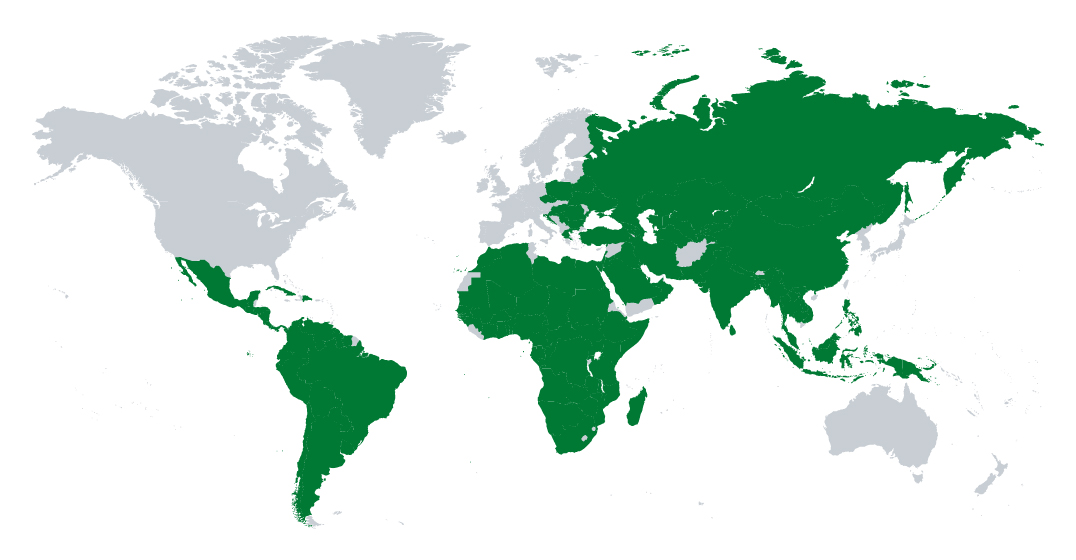 Excluding Russia and China, emerging and developing economies account for approximately 23% of global GPD, with a combined AUM of roughly $30 trillion.1 EM issuers span over 90 countries and over 1500 corporate issuers,2 creating a broad opportunity set across four distinct segments: sovereign hard currency debt, corporate credit, local interest rates and local currencies.
Despite the breadth and depth of the opportunity, the asset class is still largely misunderstood. In this piece, we challenge several common misconceptions about EM debt and discuss why a blended approach to investing may be an effective way for many investors to access the asset class.
Unique Performance Drivers
Sovereign Hard Currency & Corporate Debt
Each segment within the EM debt market is supported by unique characteristics and potential return drivers. For investors in EM sovereign hard currency and corporate debt, returns are primarily driven by the assessment of credit risk. Deep fundamental analysis of countries and companies is crucial, not only for developing strong conviction in the of issuers’ creditworthiness, but also for identifying relative value opportunities.
1. Source: IMF WEO. As of April 2026. Excludes China and Russia.
2. Source: Barings. As of September 2026.
26-5915311